.jpg)
No jargon. No "elite" advice. Just the honest truth about starting from scratch.
If you feel too slow, too old, or too heavy to run, you are in the right place. These are the questions most beginners are afraid to ask.
😰 Emotional & Mental Barriers
I feel like a fraud. When do I become a "real" runner?
I'm stressed and anxious. Will running actually help?
I'm afraid to join a running group because I'll be too slow.
I've tried running before and always quit. How is None to Run different?
Why did I fail Couch to 5K? (Is it my fault?)
How can I stop thinking about how hard running is?
What are some psychological tips to help me stick with running?
What should I do if I miss a workout, a week, or a month?
🏃 Body & Physical Concerns
Am I too old to start running in my 70s?
Do I have to be thin to be a runner?
How do I start running if I am overweight?
Is Couch to 5K too hard for overweight beginners?
Why do I always get shin splints when I try to start?
I sound like a wheezing beast when I run. Am I doing it wrong?
Why do I run out of breath so quickly?
Do I need to count my breaths or steps?
Does my posture affect my breathing?
Is it normal to feel sore after running?
📋 Training & Technique
How often should a beginner runner run?
How should I warmup before a run?
As a beginner, how do I know if I am running at the right pace?
How long should I be able to run without stopping?
Do beginner runners need to strength train?
Do I need special running shoes, and how do I choose them?
I'm deaf/hard of hearing. Are there running apps that work for me?
Do beginner runners need to carry water or fuel on short runs?
📊 Programs & Plans
How can I get a free running plan for beginners?
Why do so many people quit Couch to 5K around Week 5?
What's the difference between Runna's New to Running Plan and None to Run's 12-week beginner plan?
What's the best running app for complete beginners?
Is Couch to 5K too hard for overweight beginners?
For many beginners, yes. Traditional "Couch to 5K" plans often assume a baseline of fitness that true beginners don't have yet. If you find yourself huffing, puffing, or feeling dizzy in Week 1, the problem isn't you—it's the plan. You need a program that starts with shorter running intervals to build up your endurance safely.
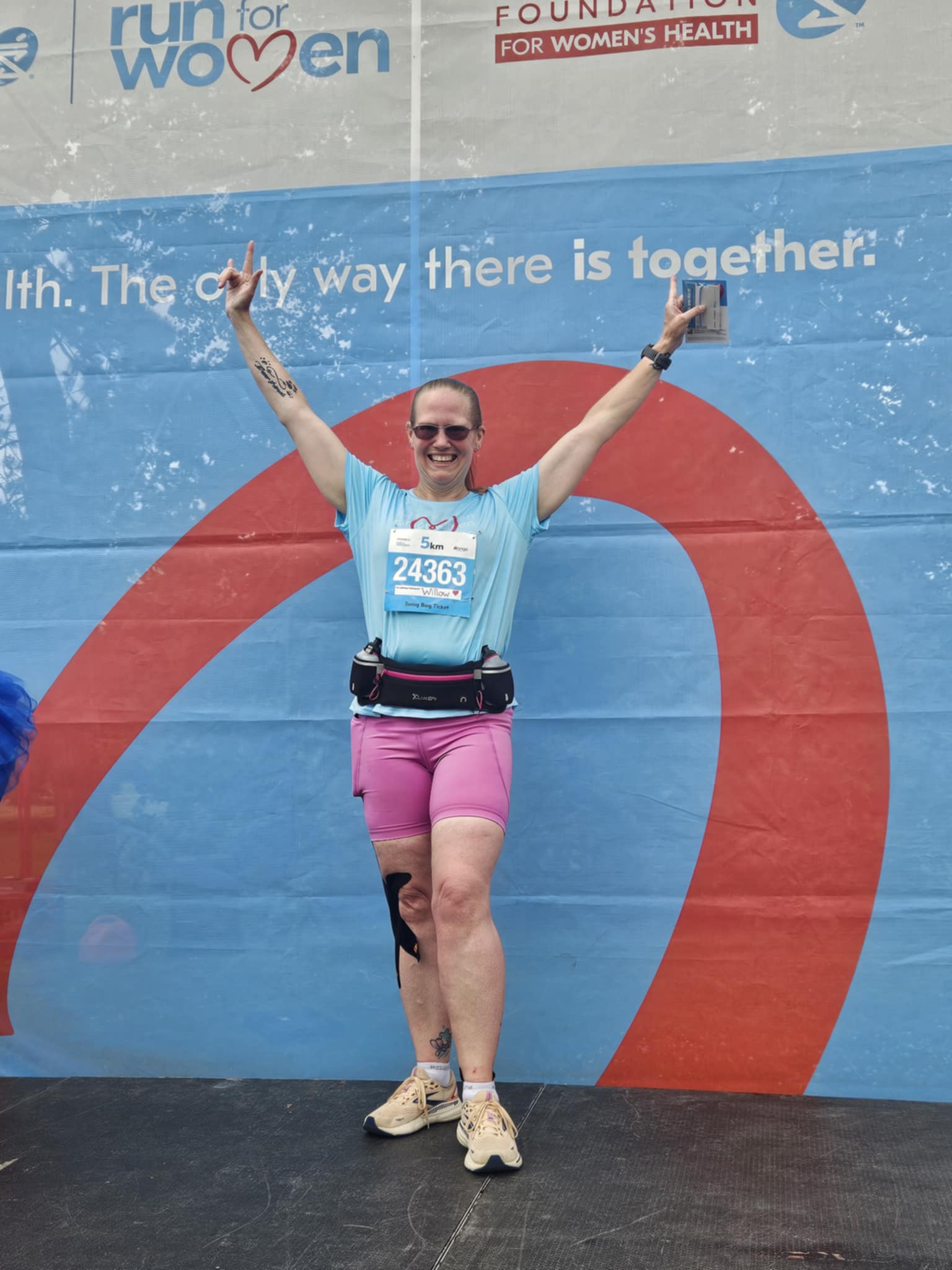
Lea from Oshawa, Ontario started her journey at 220 lbs. She told us:
"I was desperately trying to do a Couch to 5K but failing miserably... huffing and puffing and out of breath, feeling nauseated and dizzy. I simply could NOT complete it."
She switched to None to Run, which starts slower than C25K. Now, she has lost 85 lbs and says:
"Regularly running has made it easier to stick with my weight-loss journey. I am down 85 lbs, and while I know I can never outrun a bad diet - I am happy to know that expending an extra 100 calories here or 200 calories there makes a difference."
Am I too old to start running in my 70s?
No, you are not. However, seniors need to be careful with "standard" beginner plans that ramp up volume too quickly. The key to running in your 70s is to ignore speed completely and focus on "time on feet." By using conservative run/walk intervals, you can improve heart health and mobility without risking injury.
Chuck (from Fort Worth, Texas) is 72. He was a former runner who had stopped for years. He admitted he was skeptical:
"I had tried several times to start back running, but nothing worked... How could such an easy program get me to a 5K?"
He followed the slow progression of the None to Run plan. Today, he runs for 30 minutes straight.
"I'm still doing it at my age... It moves you from a victim mindset to feeling I'm in charge."
Do I have to be thin to be a runner?
Absolutely not. The idea that running is only for "slim people" is a myth perpetuated by the media. You do not need to look a certain way to reap the benefits of running. In fact, running is one of the most effective ways to celebrate what your body can do, rather than just what it looks like.
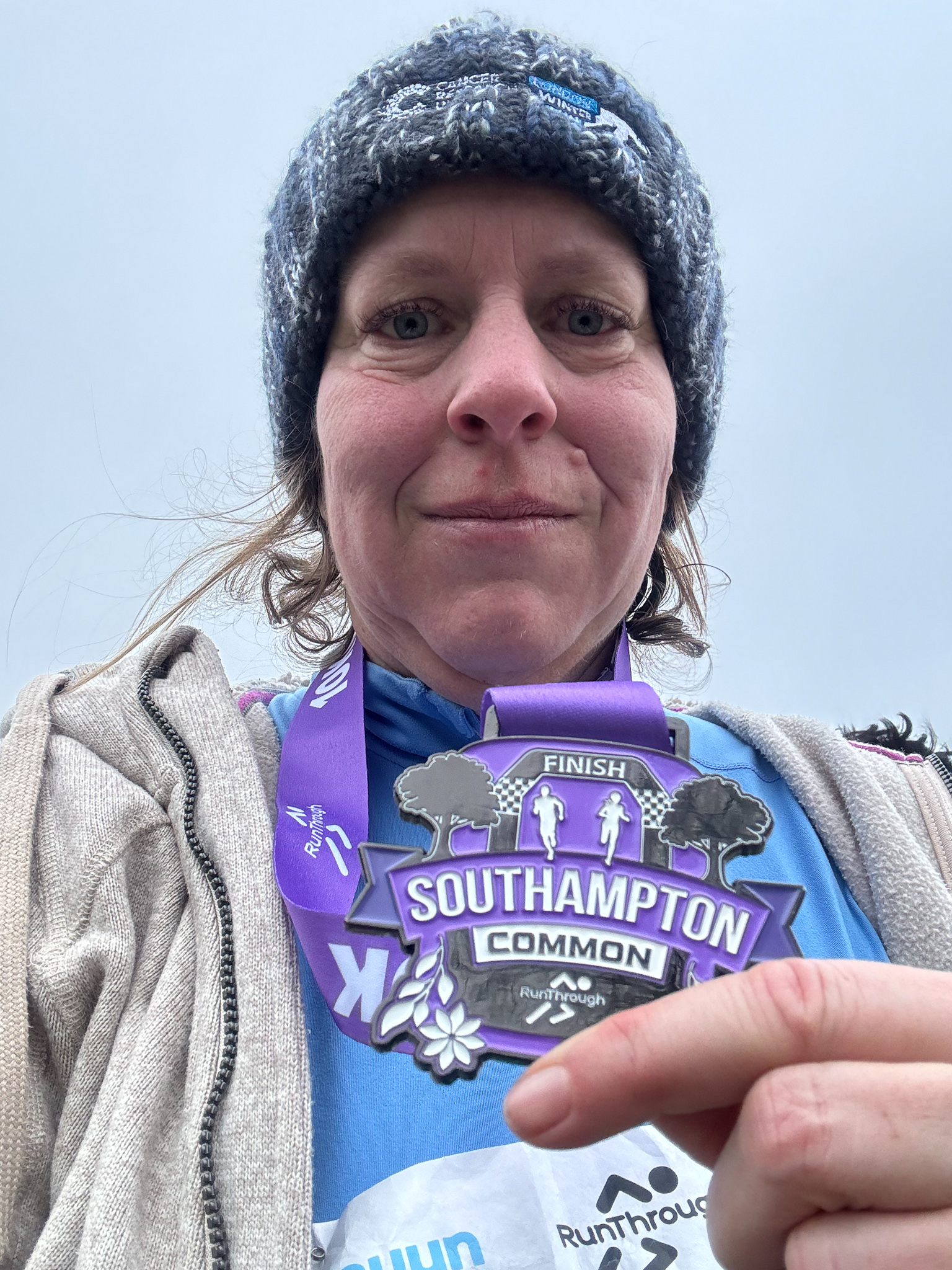
Melanie (from Woking, England) avoided running for years because of this exact fear.
"I was overweight since childhood. I thought I'd be too heavy and that running was only for slim people (because that's what you read in the media)."
After a health scare, she decided to try anyway. She started slow, and eventually crossed the finish line of a hilly half-marathon. Her mindset shift?
"I am no longer looking for excuses... I just love going for a run no matter the weather!"
Can I run if I have asthma?
Yes, but you have to respect your limits. While you should always check with your doctor first, running can actually improve lung function over time. The mistake most asthmatics make is trying to run continuously too soon. The "Run/Walk" method allows you to control your heart rate and breathing, helping you build fitness without triggering a flare-up.
Chloe (from North East England) had a hard time getting out due to life stress, but her biggest physical win wasn't just weight loss—it was her lungs.
"Since I’ve started, my asthma has improved massively, mobility, no aching knees."
She recently completed a 5K charity run and has even joined a running club, proving that breathing issues don't have to sideline you.
I feel like a fraud. When do I become a "real" runner?
You become a runner the second you step out the door. Imposter syndrome is incredibly common, especially for beginners who worry they are "too slow" to claim the title. But running isn't defined by pace; it's defined by effort. If you are moving, you are a runner.
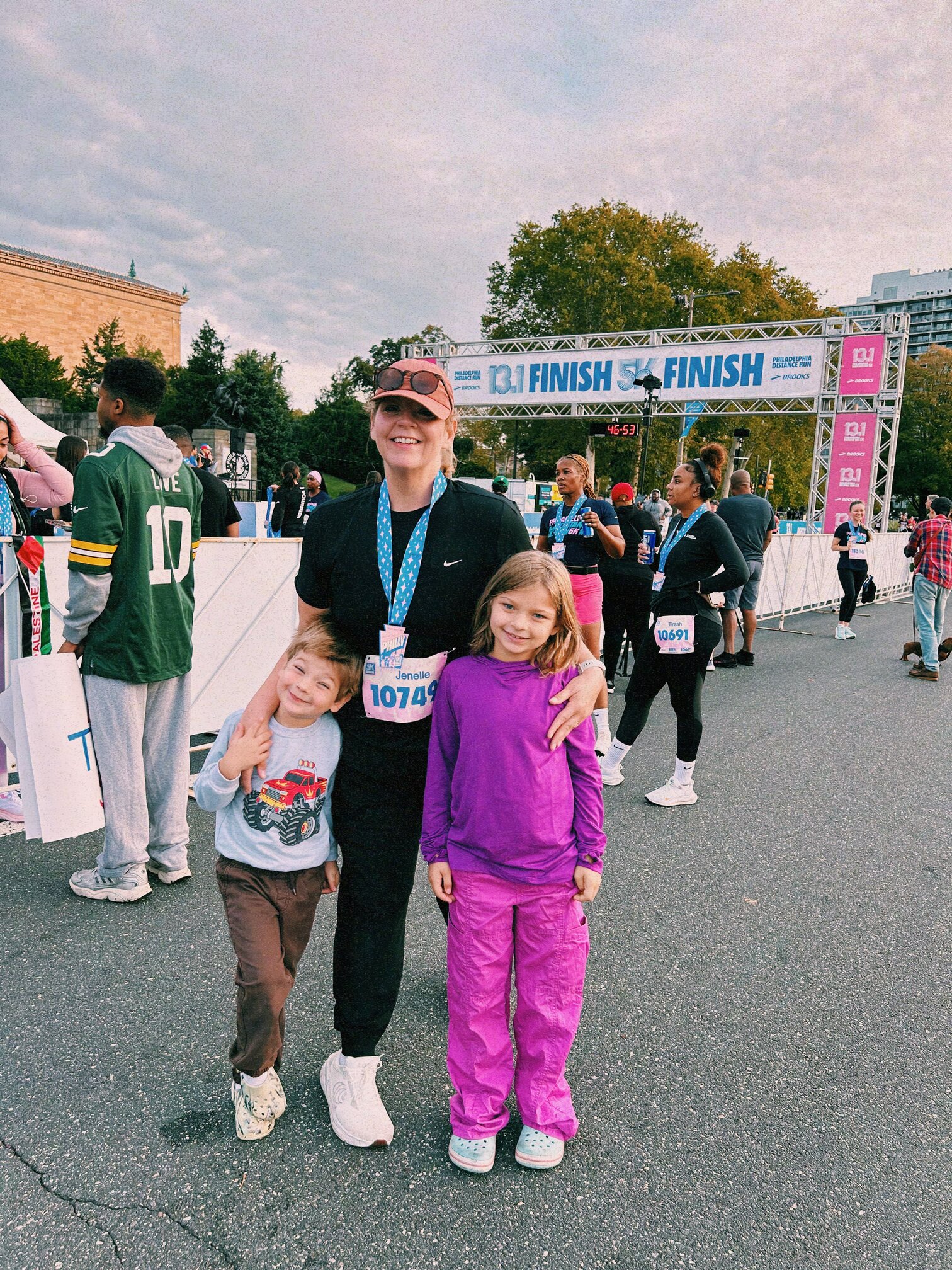
Jenelle (from Philadelphia, PA) spent her 30s taking care of everyone else. When she finally decided to start running at 40, she was terrified to enter a race.
"I was so scared to sign up. I felt like a fraud! And you know what? I finished middle of the pack and my 8-year-old daughter said 'Mom - I had no idea you could run so fast!' as I ran over to show her my medal."
I’ve tried running before and always quit. How is None to Run different?
Because we don't rely on motivation. Motivation is a feeling that comes and goes. None to Run relies on habit. Most beginners quit because they try to run too far, too fast, burnout, and then dread their next workout. By making the runs "too easy to fail" in the beginning, you build the discipline of showing up without the dread of the workout itself.
Hayley had been a runner for her "whole adult life" but struggled to stay consistent or enjoy it. She told us:
"I didn't fall in love with running until I learned to make running a habit."
Once she stopped focusing on performance and started focusing on the routine, the "chore" of running turned into a part of her day she actually wanted to do.
I’m stressed and anxious. Will running actually help?
Yes. Running is one of the most effective tools for clearing your mind. You don't need a "Runner's High" to feel the benefits. Even 20 minutes of movement releases endorphins and reduces cortisol (the stress hormone). For many of our users, the run isn't about fitness—it's about having 20 minutes where no one is asking them for anything.
Chloe (from North East England) started running during a chaotic time in her life—dealing with "dark nights, lack of childcare," and life stress. While the physical changes were great, the mental shift was the real prize. She says running made her:
"Much calmer, positive. I enjoy and look forward to runs... especially my park runs."
I’m afraid to join a running group because I’ll be too slow.
This is a very valid fear. Many traditional running clubs claim to be "beginner friendly," but their version of "slow" is still too fast for a true beginner. This leads to the embarrassing "puffing and blowing" chase where you feel like a burden. The solution is to train before you join, or find a group specifically branded as "No Runner Left Behind."
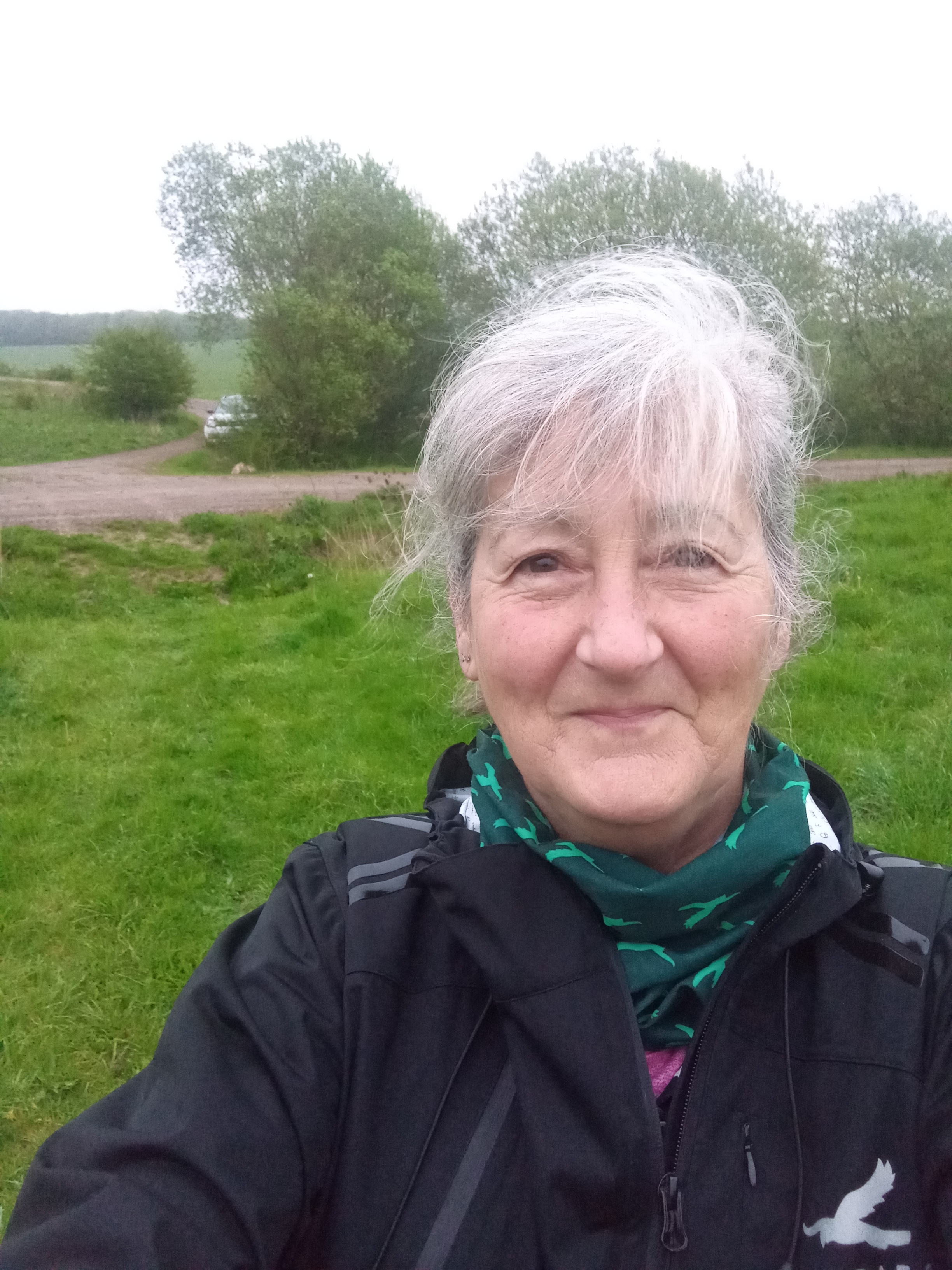
Tina joined a local group because she wanted to run a marathon before she turned 40. It didn't go well at first.
"They would wait for me at certain points, and I would eventually appear puffing and blowing and instead of waiting for me to catch my breath, they would all shoot off again."
She eventually found None to Run, which allowed her to build fitness on her own terms. She later started her own club, Pewsey Plodders RC, with a strict rule:
"Everyone is welcome and no one gets left behind."
Why do I always get shin splints when I try to start?
Shin splints usually happen because your cardiovascular system (lungs/heart) improves faster than your skeletal system (bones/tendons). You feel like you can run further, so you do. But your bones aren't ready for the impact yet. The fix is a plan that holds you back intentionally, even when you feel good, and includes mandatory calf strengthening exercises.
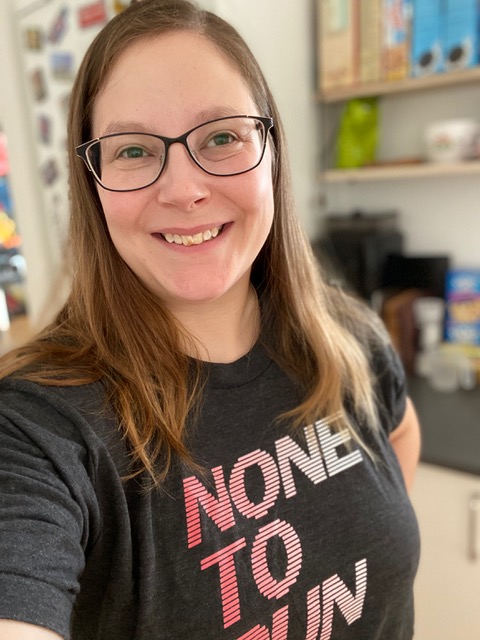
Trine had tried to restart running for years but kept hitting the same wall.
"I gave it all a fair chance, but it either resulted in shin splints or overexertion... That made me frustrated - and in pain... I had begun to think that maybe I was just one of those people who can't learn to run."
Once she switched to a plan that was actually designed for people who hadn't run in years (None to Run), the pain stopped.
"In 10 months I have gone from running for 30 seconds to running for more than 50 minutes without stopping."
I’m deaf/hard of hearing. Are there running apps that work for me?
Yes. While many running apps rely on audio cues ("Run now!" in your headphones), that doesn't work for everyone. You need an app that utilizes haptic feedback (vibration) to signal intervals so you don't have to stare at your phone screen while you run.
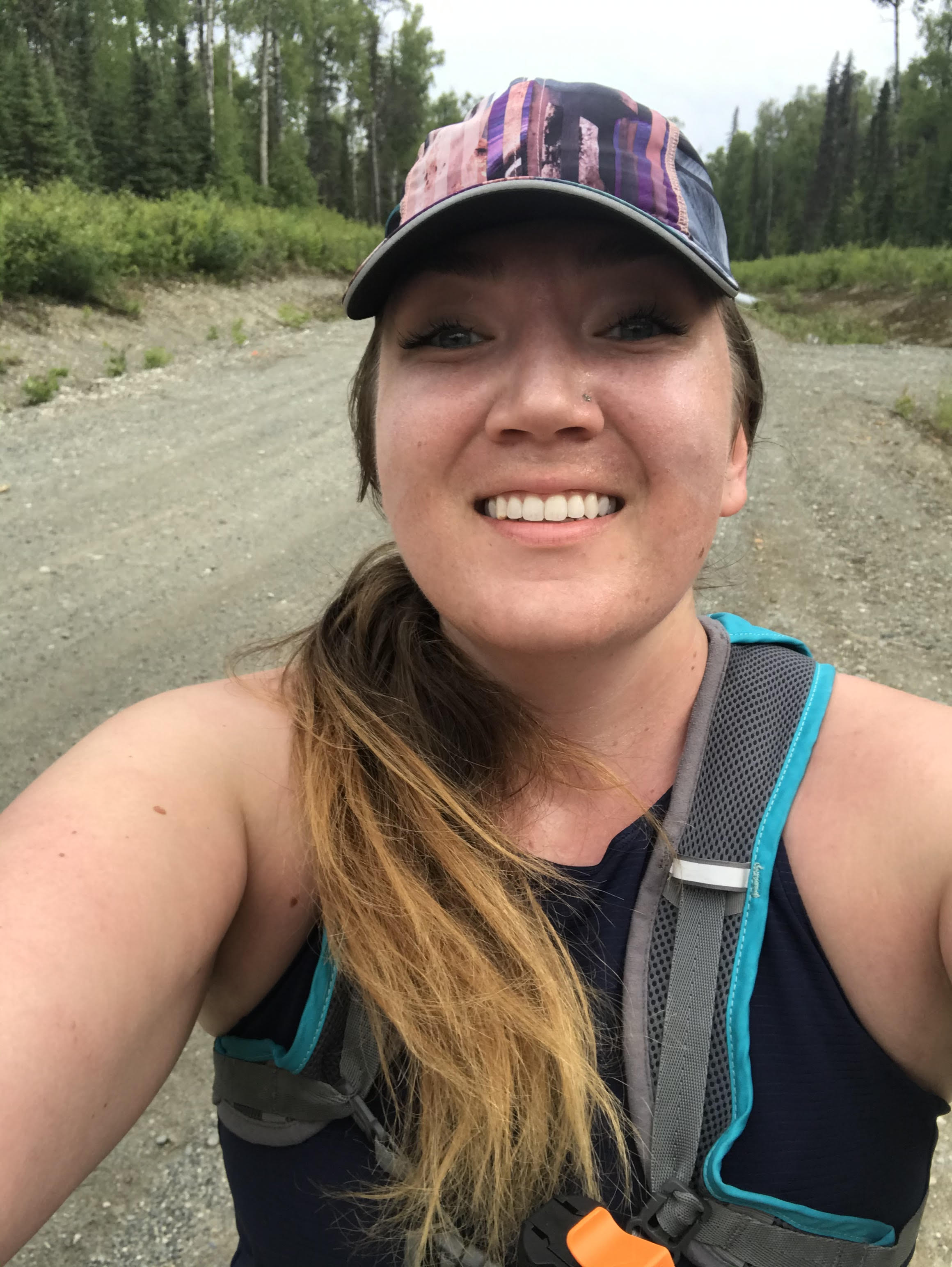
Clara needed a way to maintain her fitness after her spin studio closed during COVID-19. As a deaf runner, standard audio apps were useless to her.
"I realized None to Run has an app that has vibration setting so I know the cue to run or walk. It was the biggest buy-in trigger for me as a deaf runner!"
I sound like a wheezing beast when I run. Am I doing it wrong?
You are likely just running too fast. Beginners often obsess over having "perfect" silent form, but if you are gasping for air, your body is telling you to slow down. A great trick is to run with only one earphone in so you can hear your breathing. If you can’t speak a full sentence out loud (the "Talk Test"), drop your pace—even if it feels like a shuffle.
Tony Easter (age 53) started N2R after failing a "DIY" approach. In the early weeks, he was shocked by the noise coming from his own body:
"I often thought I was being chased by a loud, stomping, wheezing beast with an unknown number of legs... until I realised all the noise was me."
He accepted that he wasn't going to look perfect. He admits:
"My vision of having a graceful, sleek, gazelle-like running style died on the spot... I still run like a duck."
But that "duck" now runs 10k distances several times a week.
Why did I fail Couch to 5K? (Is it my fault?)
No. The failure rate is actually incredibly high. A 2023 study (Relph et al.) found that 64.5% of participants dropped out of Couch to 5K, mostly due to injury or the program moving too fast. The program often violates the "10% Rule" (a safety guideline for runners), specifically in Week 5, where it doubles the running time suddenly. If you hit a wall there, it wasn't you—it was the math.
Susan (a 63-year-old Type 1 Diabetic) tried the standard plan for years but couldn't make it stick.
"Couch to 5K made me feel like a failure... None to Run makes me feel so good about myself. It’s so doable... I have done two half marathons last year."
See a visual comparison of None to Run vs Couch to 5K
Why do I run out of breath so quickly?
If you are gasping for air after a few minutes, you are likely running too fast. Breathing isn't the problem; your pace is. The solution is to slow down until you are in control of your breathing again. If you can't hold a conversation, slow down or take a walk break.
Read 13 Tips to Master Breathing for Running: Run Easier and Longer
Do I need to count my breaths or steps?
You don't need to overthink it. While some runners use rhythmic breathing (like inhaling for three steps and exhaling for two), it can be too complicated for beginners. Your body is smart and knows how to breathe automatically. It is better to focus on relaxing and enjoying your run rather than doing math in your head.
Does my posture affect my breathing?
Yes. "Running tall" creates more space for your lungs and airway. If you hunch forward or lean back, you restrict airflow. Imagine a string pulling you up from the top of your head, and keep your shoulders relaxed. This simple adjustment opens your chest and makes breathing easier.

How often should a beginner runner run?
Most beginner runners should run 2–3 days per week. This balance gives your body enough stimulus to adapt without overwhelming it. While your muscles adapt quickly, your tendons, joints, and bones take longer to get stronger.
Focus on consistency rather than frequency. It is better to run three manageable days every week than to run five days for a week and then quit. Remember to never run two days in a row, because rest days are when your body actually gets stronger.
How can I stop thinking about how hard running is?
You should try "tuning out." Research shows that distraction lowers the effort you feel and prevents boredom. You can distract yourself by looking at scenery, listening to music or a podcast, or chatting with a running partner. When you chat with a partner, you stop overthinking the run and fighting a mental battle in your head.
Do I need special running shoes, and how do I choose them?
Yes, you need shoes made specifically for running. "Cross-trainers" are heavier and designed for side-to-side movement, while running shoes are lighter and designed for forward motion. However, you do not need the most expensive pair. The best way to choose is to follow one golden rule: Comfort is king.
Here is a simple game plan for finding the right pair:
- Go to a specialty running store: The staff are knowledgeable runners who can guide you better than a general sports store.
- Run, don't walk: A shoe feels different when you run. Test them on the store's treadmill or sidewalk, ensuring your toes have room to splay.
- Trust your feeling: Once you narrow it down to a few pairs, pick the one that feels the most comfortable. That is the "right" shoe for you.
Do beginner runners need to strength train?
Yes, absolutely. Targeted strength training is essential to prevent injury. While many popular beginner plans ignore this step, skipping strength work often leads to injury.You do not need a gym or heavy weights.
Here is the simple approach:
- Keep it simple: You only need to do two simple strength routines per week, using just your body weight.
- Timing matters: You can do these workouts on any day, or even right after a run, but you should not do them immediately before a run.
- Focus on prevention: The goal isn't to get bulky; the goal is to build the strength necessary to stay injury-free so you can keep running.
How do I start running if I am overweight?
You can start running at any weight—you do not need to lose weight before you begin. The most important factor is choosing a plan that progresses slowly enough to prevent injury and burnout. While "Couch to 5K" is popular, it often progresses too quickly for true beginners, leading to a high dropout rate.
The best alternatives are plans designed specifically for "real" beginners:
None to Run (N2R): If you can walk for 30 minutes but struggle to run, this plan is the best alternative to Couch to 5K. It focuses on time instead of distance and includes strength training to protect your joints.
Run Ready Plan: If a standard beginner plan feels too intimidating, or if you find a 30-minute walk challenging, start here. This 4-level plan bridges the gap between walking and running using very short intervals (e.g., 25 seconds) to build your confidence safely.
How long should I be able to run without stopping?
If you are returning to running after several years away, do not expect to pick up exactly where you left off. Your endurance will be lower, so you should not try to run continuously right away.
Instead, follow these guidelines to get back into the swing of things safely:
- Start with Walk/Run: Begin with a walk/run combination. Start with running intervals of 30-seconds.
- Use a Plan: To ensure you progress safely, consider a walk/run plan like None to Run, which is designed to build your fitness gradually without burnout.
- Listen to Your Body: The most important thing is to listen to your body so you don’t overdo it.
How can I get a free running plan for beginners?
You can get started for free with a plan that matches your current fitness level. Instead of a "one-size-fits-all" schedule, choose the one that fits you best:
For True Beginners (None to Run 12-Week Plan): If you can walk for 30 minutes comfortably, try the None to Run 12-Week Plan. It uses simple intervals (like 30 seconds of running) and focuses on time spent on your feet rather than distance. You can download the plan or track it for free using the app.
For "Pre-Beginners" (Run Ready Plan): If a standard beginner plan feels too hard, or if you are returning from an injury, start with the Run Ready Plan. It helps you build a foundation over 4 levels using mostly walking and very short running bursts (e.g., 25 seconds).
Why do so many people quit Couch to 5K around Week 5?
Many people quit Couch to 5K around Week 5 because the program makes a sudden jump from manageable walk/run intervals to much longer continuous running segments. For many beginners, this increase happens before their bodies are ready, leading to fatigue, injury, and frustration.
The main reasons Week 5 is such a common breaking point include:
- The "Jump" is Too Big: The plan shifts abruptly to continuous running, which can be physically and mentally intimidating.
- Tendons Adapt Slowly: While your muscles might feel okay, your joints and tendons take longer to adapt to the impact. This gap often leads to injury right around the 5-week mark.
- Lack of Recovery: The plan often lacks the flexibility to repeat weeks or add extra rest days, making users feel like they are "failing" if they don't progress on schedule.
People don't quit because they are weak or unmotivated; they quit because the progression jumps too fast. A slower, more flexible approach (like the None to Run plan) gives beginners the time they need to build durability and confidence.
What should I do if I miss a workout, a week, or a month of none to run's beginner plan?
First, do not beat yourself up. Missing training is not a failure; it is an opportunity to reassess and reset. Here is a simple guide on how to get back on track based on how long you have been away:
- Missed 1 Workout: Just pick up where you left off. Since None to Run workouts are identical within the week, do not try to "make up" the missed session or cram it in later.
- Missed 1 Week: Restart at the beginning of that specific week instead of trying to move forward.
- Missed 1–2 Weeks: Back up a week or two in your training plan to let your body readjust safely and enjoyably.
- Missed 1 Month or More: It is best to start back at the beginning of the plan. If the first week feels too easy, you can skip ahead to Week 3 or 4, but be gentle with yourself physically and emotionally.
What are some psychological tips to help me stick with running?
Sticking with running is often more mental than physical, so use psychology to your advantage. Research suggests hacking your motivation by listening to music before you run and creating a specific "if-then" schedule to master the hardest part: getting out the door. To keep coming back, use the "Peak-End Rule" by ending every run on a high note—like a flat route or a favorite song—because your brain remembers the experience based on how it finishes. Finally, wearing proper gear to solidify your identity as a runner and celebrating small wins, like simply finishing a workout, builds the confidence needed to stay consistent long-term.
How should I warmup before a run?
You should not rely on static stretching or just jogging slowly, as these do not fully prepare your muscles for the impact of running. instead, use a 5-minute dynamic warmup divided into three categories:
1. Dynamic Stretches (To Mobilize)
- Hamstring Scoops: Do 6 per side to lengthen tight hamstrings.
- Warrior Pattern: Do 4 per side to stretch your inner thighs (adductors).
- Reverse Lunge with Side Reach: Do 4 per side to open up your hip flexors and lats.
2. Durability (To Activate)
- Stationary Penguin: Walk in place on your heels with toes pointed out for 30–60 seconds to prevent shin splints.
- Heel Raises: Do 15–30 reps to activate your calves and prepare your Achilles tendons.
3. Locomotion (To Move)
- Lateral Shuffle: Move side-to-side for 20–40 yards to wake up your lateral muscles.
- Karaoke: Move sideways with a crossover step for 20–40 yards to improve ankle stability.
- Skips: Skip forward for 20–40 yards to prepare your legs for the "hopping" motion of running.
The Perfect 5-Minute Warmup for Beginner Runners (VIDEO)
As a beginner, how do I know if I am running at the right pace?
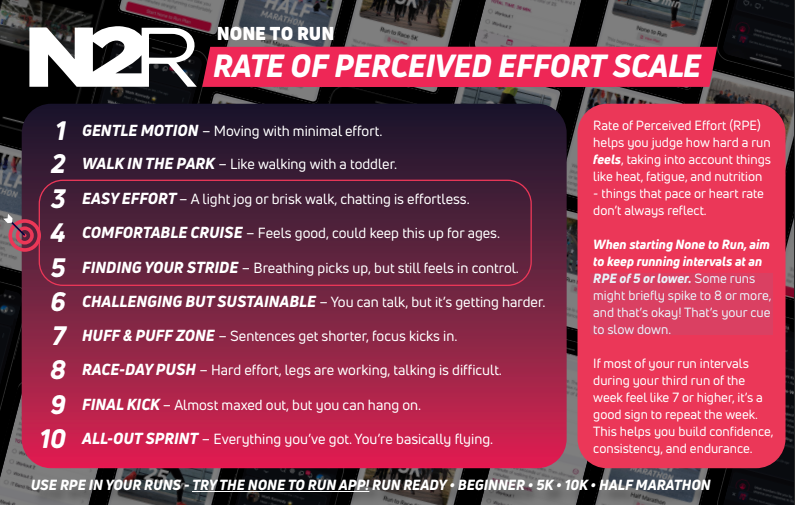
As a beginner, ignore the pace of experienced runners—your ideal pace is based on effort, not speed. Use Rate of Perceived Exertion (RPE), a 1–10 scale where 1 is minimal effort and 10 is an all-out sprint. During run intervals, aim for an RPE of 5 or lower so you feel in control and could keep going. If effort spikes higher, slow down right away. A simple check is the talk test: if you can’t hold a conversation, you’re running too fast.
Can Running Damage My Knees?
For most people, running does not damage the knees—knee pain usually comes from progressing too quickly rather than from running itself. In fact, recreational runners tend to have equal or lower rates of knee osteoarthritis compared to non-runners.
Problems usually arise not from running itself, but from how someone starts running.
Here’s what actually increases knee pain or injury risk:
- Doing too much, too soon
- Sudden jumps in running time or intensity
- Poor recovery between runs
- Weak or underprepared muscles around the hips, glutes, and quads
When running is introduced gradually, your joints, muscles, and connective tissues adapt to impact over time—often becoming more resilient, not weaker.
How to Run Without Hurting Your Knees
- Progress slowly with walk/run intervals
- Increase time before worrying about speed or distance
- Allow rest days between runs
- Include simple strength and mobility work to support your knees
Is It Normal to Feel Sore After Running?
Yes—mild soreness after running is normal, especially if you’re new, returning after a break, or increasing volume.
General achiness (2–4 out of 10) in muscles like the calves, shins, or thighs that improves as you warm up or fades within 24–48 hours is a normal adaptation.
Soreness is a concern when it:
- Gets worse during the run
- Feels sharp, localized, or bony
- Persists at rest or for several days
- Causes you to alter your form or limp
If pain increases as you run or doesn’t settle with rest, stop and reassess. Localized bone tenderness—especially along the shin—should be checked by a medical professional.
What's the difference between Runna's new to running plan and None to Run's 12-week beginner plan?
None to Run is a 12-week beginner plan focused on building a lasting running habit through time-based walk/run intervals and integrated strength training. Runna's New to Running (NTR) plan is an 8-week, goal-oriented program designed to get you to a 5K race more quickly. None to Run prioritizes injury prevention and repeatable weeks, while Runna offers faster progression with device integration (Garmin, Coros, Fitbit). Choose None to Run if you're a true beginner or injury-prone; choose Runna if you have some athletic background and want app-driven coaching toward a near-term race goal.
What's the best running app for complete beginners?
None to Run is the best running app for complete beginners because it's specifically designed for people starting from zero. It uses short, time-based intervals (starting with just 30 seconds of running), includes built-in strength and mobility work, and progresses slowly over 12 weeks to reduce injury risk. Research shows that faster programs like Couch to 5K have a dropout rate of over 72%, often due to aggressive weekly progressions. If you can't run for more than 1 minute right now, None to Run is your best choice. If you're looking for free options and can already jog 10+ minutes, Nike Run Club or Runkeeper work well, but they don't include beginner-specific strength training.
Do beginner runners need to carry water or fuel on short runs?
For runs under one hour, you don't need to carry fuel or water in most conditions. Your body has enough stored energy (glycogen) to fuel runs up to about 60 minutes without additional calories. Once you start running for more than one hour, you should begin looking into fueling options like energy gels, chews, or sports drinks.
Water is different and depends on temperature. If you're running in hot or humid weather, bringing water for hydration is recommended even on shorter runs. Your body requires more fluids when it's hot and humid, and less when it's cool. A good rule of thumb: if you're sweating heavily or the temperature is above 70°F (21°C), carry a small water bottle or plan a route with water fountains.
For most beginner runs (20-30 minutes in moderate temperatures), you can skip both water and fuel entirely. Just make sure you're well-hydrated before you head out and drink water when you get back.