


4.8 out of 5 Stars
7,100+ Ratings in the Apple App Store

Get our free printable running plan, specifically tailored for beginners
Access exclusive strength & mobility training videos
Overcome common injuries with our expert tips
Join our 12,000+ strong running community
If couch to 5k is too hard - this is the plan for you! This has got me running after injuries and surgeries and starting all over building fitness! Great program and lots of support!

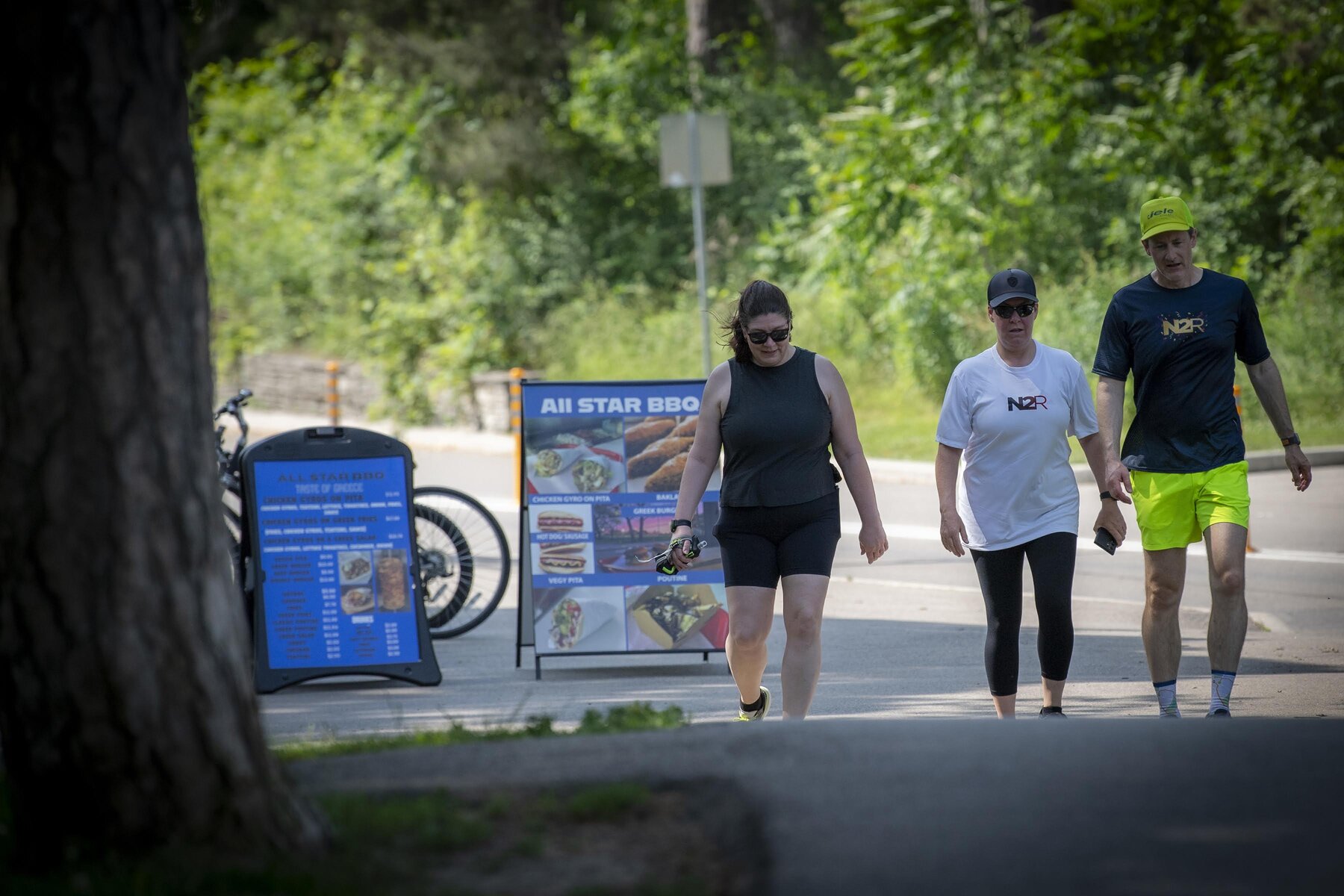
You took a walk break and felt ashamed. Here's why that shame is misplaced — and what the evidence says.
You're out there, trying. You laced up, determined today was the day — but around five minutes in, your lungs said no.
So you walked.
And the moment your pace dropped, a familiar voice showed up. You know the one. It sounds something like: real runners don't walk. You're not doing it right. You're cheating.
If you've ever had that thought — even for a second — this article is for you.
Because that voice is wrong. By the end of this, I want you to understand why, deeply enough that you never let it stop you from getting out the door again.
The shame didn't come from nowhere. It came from a running culture built almost entirely around one idea: continuous running is the goal, and anything less is a failure.
Look at most beginner programs. They're structured as a countdown to the moment you no longer need to walk. Week one: run 1 minute, walk 2. Week five: run 20 minutes straight. The implicit message? Walking is a temporary embarrassment you're trying to escape.
Race culture reinforces it. You see walkers near the back, and in the cultural shorthand of running, 'back of the pack walker' carries a tinge of apology. Nobody talks about people who ran a marathon with strategic walk breaks as proudly as those who ran it continuously, even if their finish times are identical.
Then there's the era most of us grew up in. No pain, no gain. Push through it. If it's hard, it's working. These were the messages we absorbed, and for adults in their 40s, 50s, and 60s starting running, they're especially loud.
But here's the thing: those rules were written by and for a specific kind of athlete. Young, already fit, training for performance. They were never designed for someone starting from scratch at 52. They just got applied to everyone anyway.
Let's talk about Jeff Galloway for a moment.
Galloway ran in the 1972 Olympics. He went on to coach hundreds of thousands of runners and develop what became known as the Run-Walk-Run method — a structured approach to running that uses intentional, timed walk breaks not as a crutch, but as a training strategy.
His research showed that runners using his method experienced fewer injuries. Anecdotally, runners who adopt walk breaks early tend to be the ones still running years later, while those who pushed through without them have often quit or gotten hurt.
Here's something worth considering: walk breaks aren't just for people who are struggling. Every weekend, thousands of capable runners choose to run-walk a 5K or 10K, not because they have to, but because it lets them enjoy the experience. They finish feeling good, not destroyed. They run alongside a friend just starting out, a spouse trying their first race, or a grown kid home for the weekend. The run-walk strategy makes those moments possible. It turns a race from an ordeal into something you want to do again.
Masters athletes, runners over 40, 50, or 60, use walk breaks as a longevity tool. The goal isn't to look impressive on any single run. The goal is to still be running at 70.
The people who have been running the longest are often the ones who walk the most. That's not a coincidence.
Here's something your lungs and your legs won't tell you at the start: they adapt at completely different rates.
Your cardiovascular system, your heart and lungs, is adaptable. It responds to training within weeks. A few months of consistent effort and you'll feel fitter. But your tendons, ligaments, and bones need much longer. It can take months to years to fully adapt to the repeated impact of running.
This gap is why injury rates among beginner runners are so high. People feel fitter, push harder, and the connective tissue, still catching up, breaks down. Shin splints, stress fractures, IT band pain, runner's knee. The injury list is long, and almost all of it is caused by doing too much too soon.
Walk breaks are a solution to this problem. They give your muscles active recovery during the run. They moderate your heart rate, keeping many beginners in a more productive aerobic zone than they'd achieve by grinding through at their limit. They also spread the impact load over a longer period, giving your body a chance to absorb the stress.
In my experience coaching beginners, runners who progress gradually with walk breaks from the start are the ones who complete the program, stay injury-free, and come back for more. Those who push past the walk breaks too soon end up sidelined.
Programs that forbid walking aren't more effective. They're just harder. Harder isn't the same as better, especially when you're starting out.
I want to tell you about Marian Leicester.
Marian started running for the first time at 82. Not just jogging a little, but proper training, using None to Run. She started with 30-second run intervals, walking in between, building up week by week as the program is designed.
She did it. When she tells her story, she doesn't call it remarkable or exceptional. She describes it as something simply available to her because None to Run didn't demand continuous running on day one. It met her where she was and let her body set the pace.
Marian Leicester used None to Run to become a runner for the first time at 82. She started with 30-second intervals. The finish line doesn't ask how you got there.
Marian isn't unique in kind, only in age. Every week, people in their 40s, 50s, and 60s discover the reason they failed previous running programs wasn't a lack of willpower or fitness. It was a mismatch between what the program demanded and what their body needed.
I've been coaching runners for years, and I'll tell you honestly: I use walk breaks myself. After shoulder surgery earlier this year, I eased back into training by run-walking. It worked. That's the point. It's not just a beginner's tool or a fallback. It's smart running. The idea that I'm less of a runner for doing it has never occurred to me, and it shouldn't occur to you either.
Now that you have permission, let's make it work.
The key distinction is this: structured walk breaks are different from collapsing into walking because you have no other choice. One is a training method. The other is a sign your program is too aggressive.
Here's what structured run-walking looks like at the beginner level — using the None to Run plan as the example, because the progression is exactly right:
Start smaller than you think you need to: None to Run's Week 1 is 30 seconds of running followed by 2 minutes of walking, repeated 8 times, a 25-minute workout including a warm-up walk. Yes, 30 seconds. Most people feel embarrassed by how manageable it is. That's by design. You're not training your lungs yet; you're training your tendons, ligaments, and your habit. Starting this gently is what makes it sustainable.
Progress in small, deliberate steps: The running intervals increase by 30 to 60 seconds at a time across 12 weeks, never a sudden jump that leaves you gasping. By Week 12, you're running 25 minutes continuously. That's a transformation, but it happens so gradually most people don't notice the difficulty climbing. That's the point.
Run by time, not distance: None to Run is time-based, with no GPS pressure or pace expectations. You run for 30 seconds, whether you cover 50 metres or 100. This removes one of the biggest sources of shame for beginners: feeling slow. Your only job is to move for the allocated time.
Repeat weeks without shame: If a week feels hard, stay there. The program is built to be repeated. Some of the most successful None to Run runners repeated weeks two or three times. That's not falling behind; that's your body asking for the adaptation time it needs. Honour it.
Keep the walk breaks even when you feel good: As you get fitter, you'll reach points where you could push through the walk break. Take it anyway. The walk break isn't a reward for struggling; it's part of the method. Skipping it because you feel good is how people get ahead of their recovery and end up injured two weeks later.
If continuous running is your goal, this is the fastest and safest path to get there. Not because it's a shortcut, but because it builds the aerobic base and structural resilience you need before asking your body to run continuously. Grinding through pain to skip that step doesn't get you there faster. It usually just gets you injured.
Think back to the moment at the start of this article. You were out there, moving, trying — and a voice told you it wasn't enough.
That voice doesn't know what it's talking about.
Running is not defined by your pace. It's not defined by whether you walked. It's not defined by what anyone else thinks about how you got to the finish line. The only people who aren't real runners are those who decided the rules were too rigid and stopped showing up. You're still here.
Walk breaks are not a phase you need to get past. For many runners, especially those starting later in life, they're the method. They're what made running sustainable when everything else made it feel impossible.
If you've tried other programs and they've broken you — too hard, too fast, too painful, too much shame when you needed to walk — that wasn't a failure of your body or willpower. It was a failure of the program.
A program that meets you where you are isn't easier. It's smarter.
None to Run is built around the walk-to-run method, not as a compromise or a stepping stone to 'real' running. It's the program. From day one, every session is designed around your body's pace of adaptation, with walk breaks built in because that's what works, not because we didn't have the heart to demand more.
If you've been looking for a program that doesn't make you feel like a failure for walking — you've found it.
Absolutely. Many runners — including experienced ones — use walk breaks during 5Ks as a strategic tool. There are no rules against it, and finishing is finishing, regardless of how you got there.
Yes. Experienced recreational runners, masters athletes, and even utltra runners all use intentional walk breaks as part of their training and racing strategies. The idea that 'real' runners never walk is a cultural myth, not a running reality.
Run-walking is excellent exercise. It raises your heart rate, burns calories, builds cardiovascular fitness, and strengthens the muscles and connective tissue involved in running. A study published in the Journal of Science and Medicine in Sport found that run-walk runners and continuous runners finished a marathon in comparable times — but the run-walk group reported significantly less muscle discomfort throughout. That's one study, and marathoners rather than beginners specifically, but the findings point in a consistent direction: structured walk breaks don't cost you the workout. They change how your body experiences it.
Many people who start with run-walking eventually transition to continuous running, and run-walking is actually the fastest, safest route to get there. But it's also worth knowing that plenty of experienced, healthy, fit runners choose to run-walk permanently. Both outcomes are great!
If you're starting from scratch, a good place to start is 30 seconds of running followed by 2 minutes of walking. That's exactly how None to Run begins — and the 2-minute walk break isn't a consolation prize, it's intentional recovery time that lets your body absorb the effort before asking it to run again. As your fitness builds over weeks, the running intervals gradually increase while the walk breaks shorten. A structured program like None to Run handles that progression for you automatically.
You don’t need to be fast, fit, or fearless to become a runner.You just need a simple plan, an encouraging community, and the consistency to keep showing up — and None to Run gives you all three.

7,100+ Ratings in the Apple App Store

Time is hard to come by. Kids, work, and other commitments can get in the way. You need a plan that's easy to follow and can work around you, not the other way around.

You look "weird" when you run. You’re “not” a runner. You’re too “slow” or too "Old." We're here to tell you right here, right now, that you’re wrong. You only *think* these things because it's new and you feel uncomfortable. That'll change with consistency and time. You are a runner!

It may have been hard previously, but it doesn't have to be – now, you'll be given the tools and the knowledge to succeed. We’re doing things differently in order to see different results.

Running when you aren't ready or without the proper training can hurt, leaving you with nagging injuries that never seem to clear up. We ease you in, giving you the strength and conditioning you need to make sure your running doesn't come with pain.