
Maybe you used to run regularly. Maybe you played sports or were simply more active than you are today. Either way, getting started again can feel harder than it used to. You don't need to pick up where you left off. Our gentle 12-week run-walk plan helps you build your fitness gradually, one manageable workout at a time.
Start the 12-week rebuild free7-day free trial. 200,000+ beginners have started a plan. 4.8 stars from 7,100+ App Store reviews.
.jpg)
Start below your old fitness, not at it. Begin with 30-second run intervals and walk breaks so your tendons and joints can catch up to your lungs. Add two short strength sessions a week. Build to 25 minutes of continuous running over 12 weeks, and treat the first month as the most important one.
If you've tried to get back into running before, you probably know this story.
You remember what running felt like. You remember the 5K time, the two-a-days, the PT test you passed without thinking about it. So you lace up, head out, and run three miles because three miles used to be a warm-up.
And it feels fine. Sore the next day, but fine.
Then week two. The calf tightens. The Achilles gets stiff in the morning. A knee starts complaining on stairs. You push through one more run because you're not the kind of person who quits, and that's the run that puts you on the couch for a month. The shoes go back in the closet. Another year goes by.
This isn't a willpower problem. It's a timing problem.
Your heart and lungs come back fast. A few weeks of running and your cardio feels close to where it was. But tendons, ligaments, and bone adapt much more slowly, often over months, not weeks. So you end up with an engine that's ready and a chassis that isn't. Your fitness says go. Your connective tissue says not yet.
The harder you trained back then, the more this matters now. You have the memory of a high workload and none of the tissue tolerance to handle it. That gap is the whole problem, and no amount of toughness closes it. Only time and a sensible build do.
Here's the rule I give every runner coming back from a long layoff: progress slower than you think you need to.
Not because you can't handle more. Because the version of you that could handle more is the one who got hurt last time. The goal of month one isn't fitness. It's building a body that can keep running in month four.
That means three things.
Walk breaks aren't a crutch. They're how you control the load on your legs while your heart rate climbs. Thirty seconds of slow running and two minutes of walking, repeated, gives your tendons a dose they can recover from. In week one that feels almost insultingly easy. Good. Easy is the point.
Two short sessions a week. Calves, glutes, hips, core. Nothing fancy, no gym required. This is the part most comeback plans skip, and it's the part that keeps the calf and the knee from ending your season in week two.
Forget your old times for twelve weeks. Run at a pace where you could hold a conversation. If that's slower than you'd like, it's still faster than being injured. The speed comes back on its own once the base is there.
Why not Couch to 5K? If you've tried C25K and it fell apart around week three or four, you're not alone. It's a decent program, but it ramps hard in the middle, has no strength work, and wasn't designed for someone whose body has an old high-mileage history and a long gap. Here's how None to Run compares to C25K.
Think of this the way a coach brings an athlete back after a long layoff. Nobody goes from the injured list straight into a full game. There's a progression, and every stage has to be earned before the next one opens up.
The None to Run program is that progression, built for people starting from zero. Three runs a week, about 30 minutes each. Two short strength sessions. Twelve weeks.
| Phase | Weeks | What you're doing | What it's for |
|---|---|---|---|
| Foundation | 1 to 4 | Short run intervals with generous walk breaks. Strength twice a week. | Teaching tendons, joints, and bone to tolerate impact again. The most important month in the plan. |
| Build | 5 to 8 | Run intervals get longer, walks get shorter. Strength continues. | Turning tolerance into endurance without a spike in load. |
| Run | 9 to 12 | Continuous running, building to 25 minutes straight. | Finishing with a body that can keep going, not one that needs a month off. |
Week 1 looks like: a 5-minute warm-up walk. Then 30 seconds of slow running and 2 minutes of walking, repeated 8 times. About 25 minutes in total. That's it. If it feels too easy, you're doing it right.
Week 12 looks like: 25 minutes of continuous running at a conversational pace, with the legs to back it up.
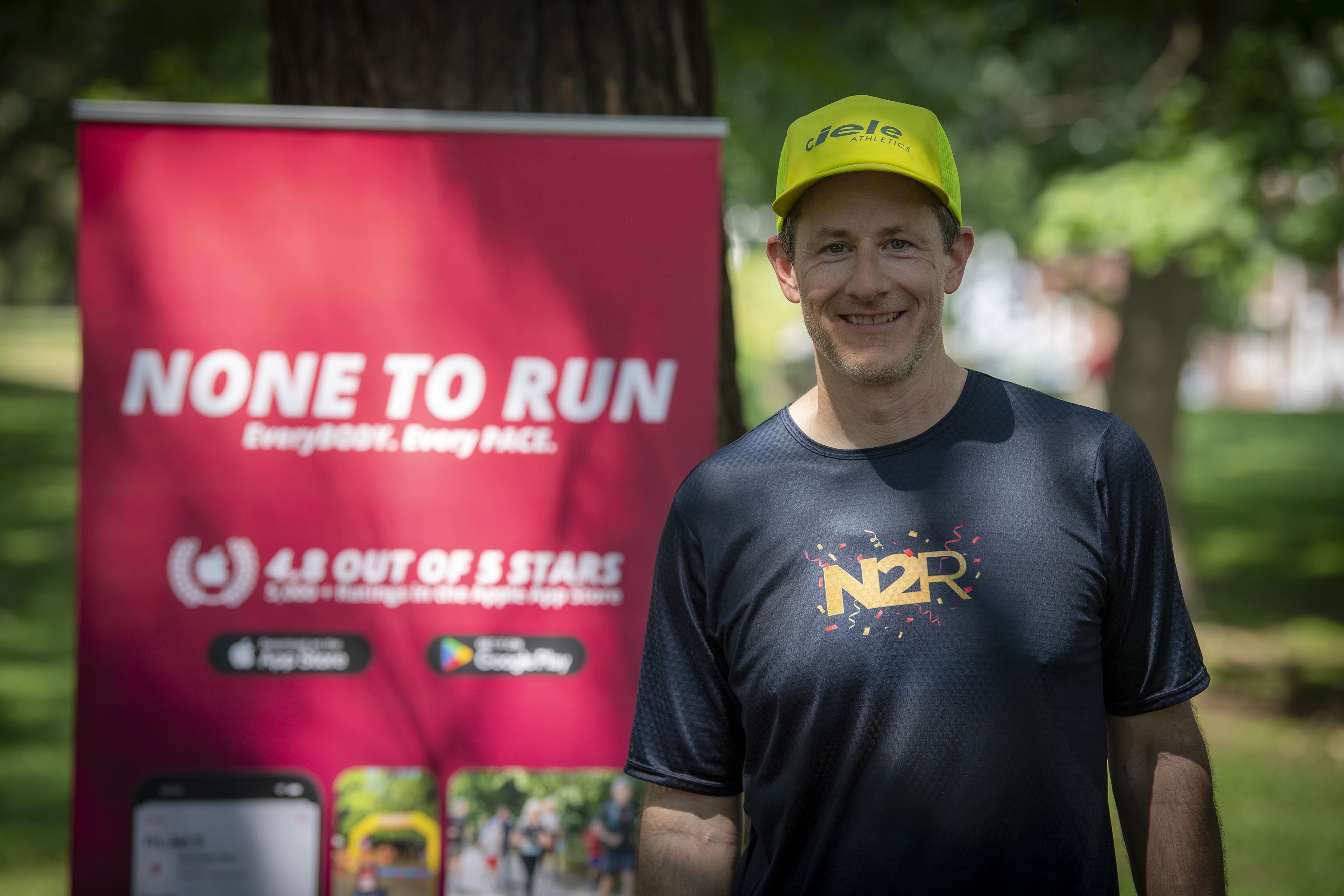
Who built this: I'm Mark Kennedy, RRCA Certified Distance Running Coach. I've spent 15+ years coaching beginners and restarters, and the thing I've learned is that the people who make it to week 12 aren't the toughest ones. They're the ones who were willing to go slow at the start.
You could run the 12 weeks off a printout and a stopwatch. Plenty of people have. The app exists for the moments where a comeback usually falls apart: when you're tempted to run longer than the plan says, or you skip a week and don't know whether to repeat it.
Voice cues tell you when to run and when to walk, so you can leave the watch alone and listen to a podcast. No counting, no guessing, no sneaking in an extra minute.
Each week unlocks the next. If a week felt hard, repeat it with one tap. The app won't let your ego skip ahead of your tendons.
Workouts are measured in minutes, not miles or pace. Your old times aren't on the screen, so they can't push you into the week-two injury. Speed comes later, once the base is built.
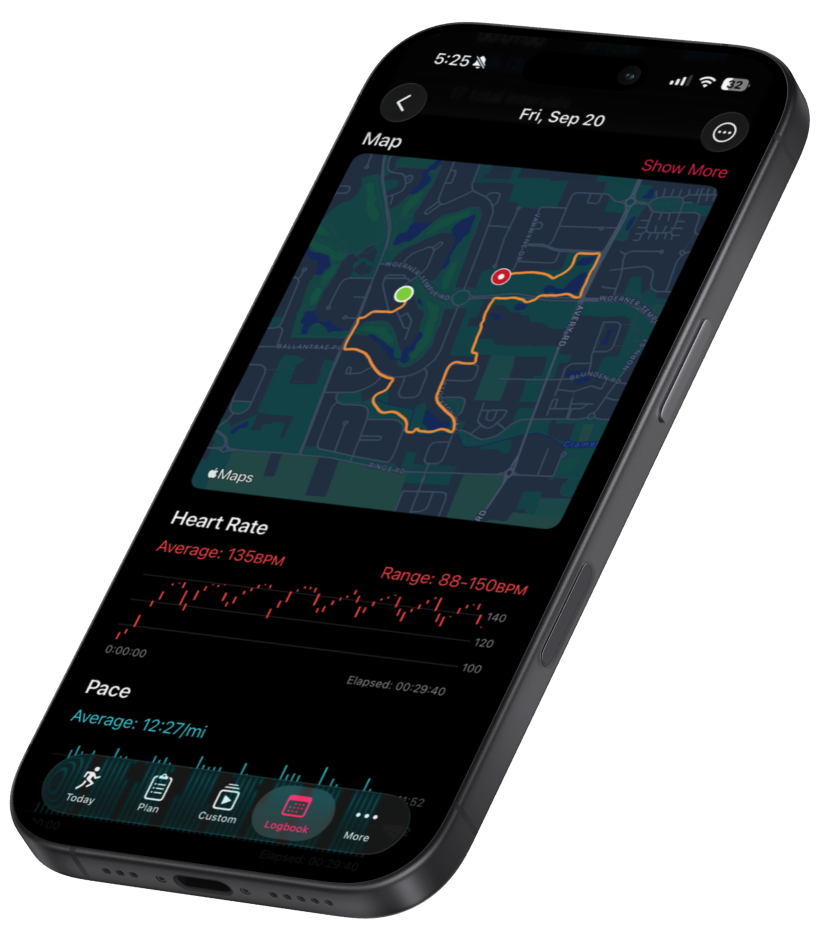
See exactly how the plan builds, week by week, from short run-walk intervals to continuous running. We'll send you the full schedule as a PDF plus a short email series on coming back from a long layoff without getting hurt. No hype, no daily emails.
Free. Unsubscribe any time.

Most of the runners who use None to Run aren't starting from scratch. They're starting over. Some played sports in school. Some served. Some ran a few races years ago and then life got in the way.
"I found your app after being frustrated with other apps that started too fast. I am a former athlete (HS & college) but life, weight gain and other things got in the way. I was honestly scared I wouldn't be able to do it, but fast forward and I have now completed Week 10. I can't tell you the last time I have worked out consistently like this."
NurseD14, App Store review
"Using N2R to get me back to distance running after back-to-back surgeries. I've taken it slowly, repeating a few weeks here and there, but feeling great. N2R uses a realistic progression format that is actually attainable, unlike any other 'start running' program I've tried. I'm confident I will be able to get back to 5K and then 10K with no issues."
ActiveEggplant, App Store review
"It's such an easy way to start or re-start running! I ran half-marathons a few years ago but quit with some unexpected health issues. Eight years and 30 lbs have motivated me to get back in. The interval reminders are the best. I can listen to a podcast and get instructions about starting and stopping at the same time."
backtorunning2020, App Store review
.png)
You don't need to be fit to start. You need a plan that respects where you are now and gets you to where you want to be without a detour through the physio's office. Twelve weeks. Three runs a week. Thirty minutes a session. Start slow, and this time, keep going.
Start the 12-week rebuild free7-day free trial on iOS and Android. Cancel any time.