


4.8 out of 5 Stars
7,100+ Ratings in the Apple App Store

Get our free printable running plan, specifically tailored for beginners
Access exclusive strength & mobility training videos
Overcome common injuries with our expert tips
Join our 12,000+ strong running community
If couch to 5k is too hard - this is the plan for you! This has got me running after injuries and surgeries and starting all over building fitness! Great program and lots of support!

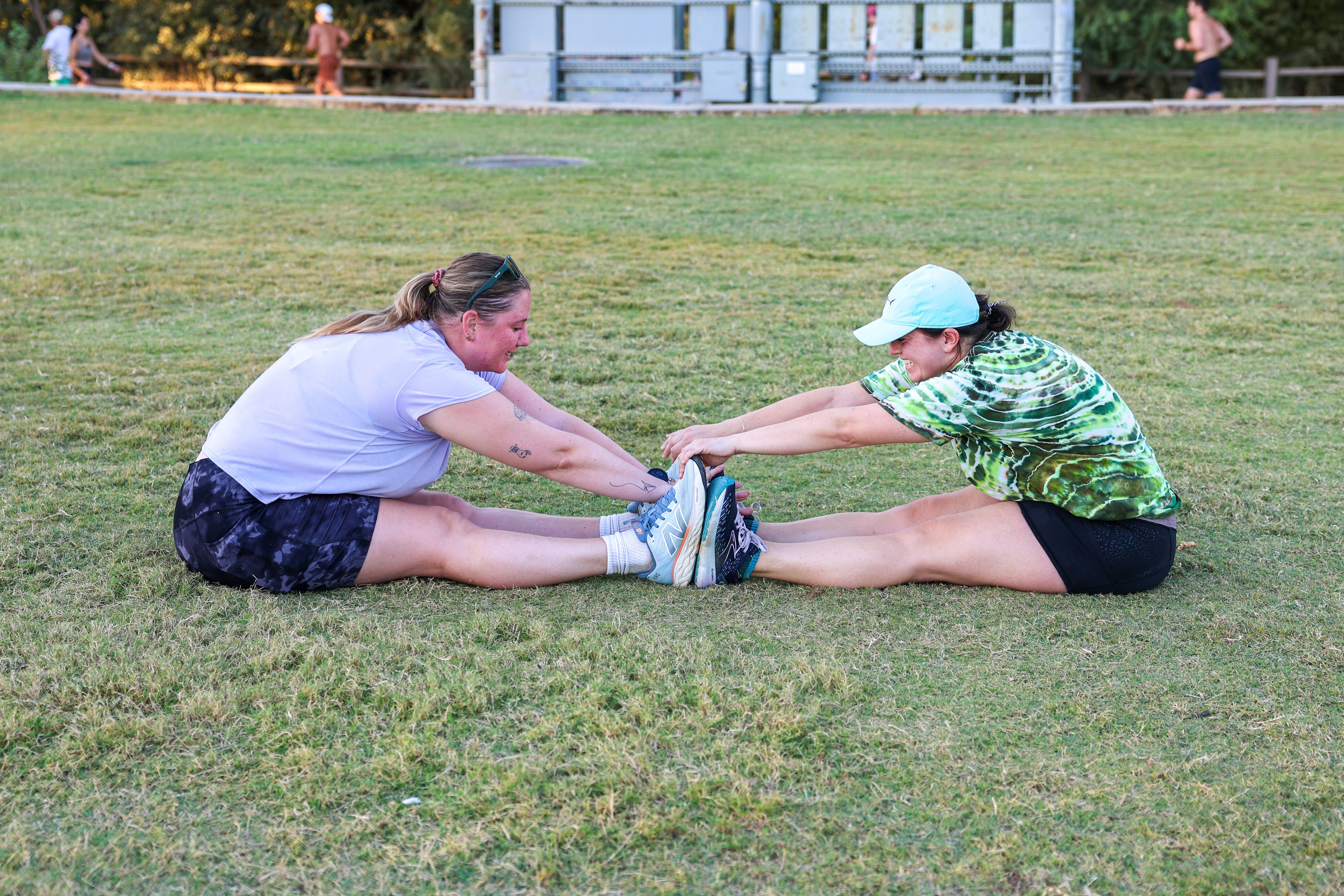
If you live in a bigger body, you may have found it extra challenging to start or maintain a running routine. First, you’re not alone. Second, while there are physiological reasons running can feel frustratingly difficult, a strategic, patient approach can not only help but also get you to actually feeling good while you run.
Quick answer
Yes, you can start running in a bigger body. Begin with a few weeks of consistent walking, then add very short run intervals with longer walk breaks. Progress slower than you think you need to, add simple strength work for your feet, hips, legs, and core, and wear well-cushioned, supportive shoes.
Heavier runners are more inclined to become injured while running due to increased force with every step. A 2018 study published in the Journal of Orthopaedic & Sports Physical Therapy states that, “Training load appears to play a fundamental explanatory role in the etiology of running-related injury.” While “training load” can refer to an increase in speed, duration, and distance by any runner too quickly, the study points to how heavier runners “are subjected to a greater load per stride because of their increased body weight, which implies that fewer stride repetitions are needed to achieve a cumulative load.”
And a 2025 study published in the European Journal of Sport Science found that those with prior running-related injuries and a BMI greater than 30 had a 71% risk of another running-related injury, while those with lower BMIs but prior injuries had a 43% chance of sustaining a new injury.
Essentially, heavier runners train harder than their lighter-weight peers with every step, and they face a higher risk of injury, especially if they have a history of running-related injury. Runners with higher BMIs put more force on joints, muscles, and connective tissues than their peers.
If this sounds like you—that every running step feels heavy, forceful, and labored, and that when you try to start running, an injury comes on—know the struggle is real.
If you’re reading this on None to Run, you’re already ahead of the game. A run-walk plan is the absolute safest way for anyone to start a running program, especially for those with high BMIs. In fact, you may want to start your running plan by skipping the running part. Walking consistently for a few weeks can help get your body used to regular movement in a safe, low-impact way.
Starting a running plan by strictly walking can be especially helpful if you’re transitioning from a primarily sedentary lifestyle, which is associated with lower bone mineral density, reduced skeletal power and strength, and a weaker cardiovascular system than someone who is otherwise active but just hasn’t yet started running. A sedentary lifestyle, the 2018 Journal of Orthopaedic & Sports Physical Therapy study points out, “may negatively affect the runner’s capacity for load.”
Walking can effectively ease the transition to the load imposed by running.
Once walking feels more comfortable and you experience fewer aches and pains after walking, easing into running with a conservative walk-run plan is a healthy next step. The key word here is “conservative.”
A 2014 study in the International Journal of Sports Physical Therapy found that a significantly greater number of individuals with a BMI over 30 sustained injuries if they ran between 3 to 6 km (1.86 to 3.73 miles) over their first week of training. Running less than two miles over the entire first week of starting a run-walk plan might sound minimal, but it’s enough to have proven potentially harmful to overweight individuals. The key is to start more conservatively than you may think. And be patient.
The 2018 study had over 900 novice runners start a self-prescribed running routine. Runners with a body mass index (BMI) between 25-30 kg/m2, and 30 kg/m2 and over ran slower and over less distance than the group with a BMI of less than 25 kg/m2, but all three groups ran roughly the same duration (time) over the week.
The study linked higher BMI to a higher risk of running injuries, even when runners ran for the same duration as those with lower BMIs, further suggesting that heavier runners should approach running differently than their peers with lower BMIs. Going out for the same amount of time or running the same 1-minute intervals within a 15-minute outing is simply more stressful on a heavier runner’s body. Consider shortening the run intervals by 25-50% compared to what is prescribed in the run-walk plan you’re following.
All 914 participants in the 2018 study participated in less than four hours of other activities throughout the week, which may have contributed to their propensity towards injury.
Cross-training activities like swimming and cycling are great, low-impact ways to supplement a run-walk plan. Yoga, Pilates, and weight training can help the body stay balanced, improve range of motion, and build durability.
In fact, a 2013 clinical review from the American Academy of Physical Medicine and Rehabilitation found that doing pre-emptive strengthening exercises before starting to run can help support the joints that bear the loads caused by running. The study suggests strengthening the feet and ankles, hip abductors, quadriceps, and trunk. Yoga and Pilates can address all those parts of the body, but here are suggestions for simple, targeted exercises to focus on each body part:
Feet and ankles
Hip abductors
Quadriceps
Trunk
High-quality running shoes are important for runners of all sizes, but they’re even more important for heavier runners. Having substantial cushioning in the midsole as well as support both under the foot and in the upper that surrounds your foot can make a huge difference in comfort, enjoyment, and protection from impact. Good running shoes are worth the investment.
It’s best to visit a running specialty store to try on different styles, see what works best for you, and get insight from knowledgeable store employees. If you must purchase online, check out the Brooks Beast 26 (the women’s version is the Ariel GTS 26) for maximum pronation control or Brooks Glycerin Max 2 for a highly cushioned shoe. Other models with a good balance of support and cushioning include: Asics GEL-Kayano 32, New Balance Fresh Foam X More v6 or Fresh Foam X 1080 v15, and Hoka Bondi 9.
Chafing can be an issue among larger runners, but gear can help. Opt for 2-in-1 shorts or short tights over traditional shorts. The next-to-skin layer will eliminate skin-on-skin thigh contact. (For winter, tights and pants do the trick!) Consider snug-fitting short- and long-sleeve shirts that create a barrier between your upper arms and the area beneath your armpits. And consider purchasing a skin lubricant, like Body Glide, which can eliminate friction in any area of your body.
Other gear that can make a big difference in comfort is supportive sports bras and compressive-fitting tights, shorts, and even socks. A good bra or clothing item that can provide a gentle, supportive hug is never a bad thing, and heavier runners may appreciate a feeling of being held in, especially while experiencing the forces of running.
Lastly, keep in mind that you’re doing it. You’re out there. You’re working towards a healthier you. With a little extra care and strategy—walking first, easing into running increments, cross-training, and gearing up—you’ll soon feel more comfortable increasing those running segments in your run-walk program, building your way towards continuous running. The goal is to look forward to the movement of running for the rest of your life, and you’re on your way.
Lisa’s advice to start conservatively is the reason None to Run begins the way it does. Week 1 is 30 seconds of easy running followed by 2 minutes of walking, repeated 8 times. If that feels like too much right now, shorten the run intervals, or repeat a week as many times as you need. There’s no deadline. Progress slower than you think you need to, and be kind to yourself.
The plan also includes simple strength workouts, so you build durability alongside your running. And whatever your size or pace, you belong here.
If you’d like a plan that handles the pacing for you, you can try the None to Run app free for 7 days.
For most people, yes, with a gradual approach. Research shows that runners with a higher BMI face a higher risk of running-related injury because each step carries more load, so how you start matters. Walk first, keep your run intervals short, and build up slowly. If you have a health condition or haven’t been active in a while, check with your doctor before you begin.
Start with a few weeks of consistent walking. Then add very short run intervals with longer walk breaks, and increase the running gradually. Add low-impact cross-training and simple strength exercises for your feet, hips, legs, and core, and wear cushioned, supportive shoes.
Often, yes. Walking consistently for a few weeks gets your body used to regular movement in a low-impact way, which is especially helpful if you’ve been mostly sedentary. Once walking feels comfortable and you have fewer aches afterward, ease into a conservative run-walk plan.
Shorter than you might expect. Try shortening the run intervals in your plan by 25 to 50%. None to Run starts with 30-second run intervals, and if that feels like too much, you can shorten them further and repeat a week as often as you need.
Look for substantial midsole cushioning and good support, both under the foot and in the upper. The best approach is to try on several pairs at a running specialty store and choose what feels most comfortable.
Wear 2-in-1 shorts or short tights so there’s a layer between your thighs, choose snug-fitting tops that protect the area under your arms, and use a skin lubricant on any spot that rubs.
You don’t need to be fast, fit, or fearless to become a runner.You just need a simple plan, an encouraging community, and the consistency to keep showing up — and None to Run gives you all three.

7,100+ Ratings in the Apple App Store

Time is hard to come by. Kids, work, and other commitments can get in the way. You need a plan that's easy to follow and can work around you, not the other way around.

You look "weird" when you run. You’re “not” a runner. You’re too “slow” or too "Old." We're here to tell you right here, right now, that you’re wrong. You only *think* these things because it's new and you feel uncomfortable. That'll change with consistency and time. You are a runner!

It may have been hard previously, but it doesn't have to be – now, you'll be given the tools and the knowledge to succeed. We’re doing things differently in order to see different results.

Running when you aren't ready or without the proper training can hurt, leaving you with nagging injuries that never seem to clear up. We ease you in, giving you the strength and conditioning you need to make sure your running doesn't come with pain.